

You have seven to eight seconds. That’s how long it takes for a prospect to form their first impression of you. In those fleeting moments, they’re deciding whether you’re credible, trustworthy, and worth their time—or just another pushy salesperson to brush off.
For beginners in direct sales, that reality can feel overwhelming. But here’s the good news: mastering those critical first moments is a learnable skill, not an innate talent.
Read below as we break down the essential direct sales tips that focus on creating powerful first impressions. Discover the best direct sales strategies for opening conversations, and understand the common mistakes that lose prospect attention before you’ve even begun.
The Seven-Second Window That Determines Everything
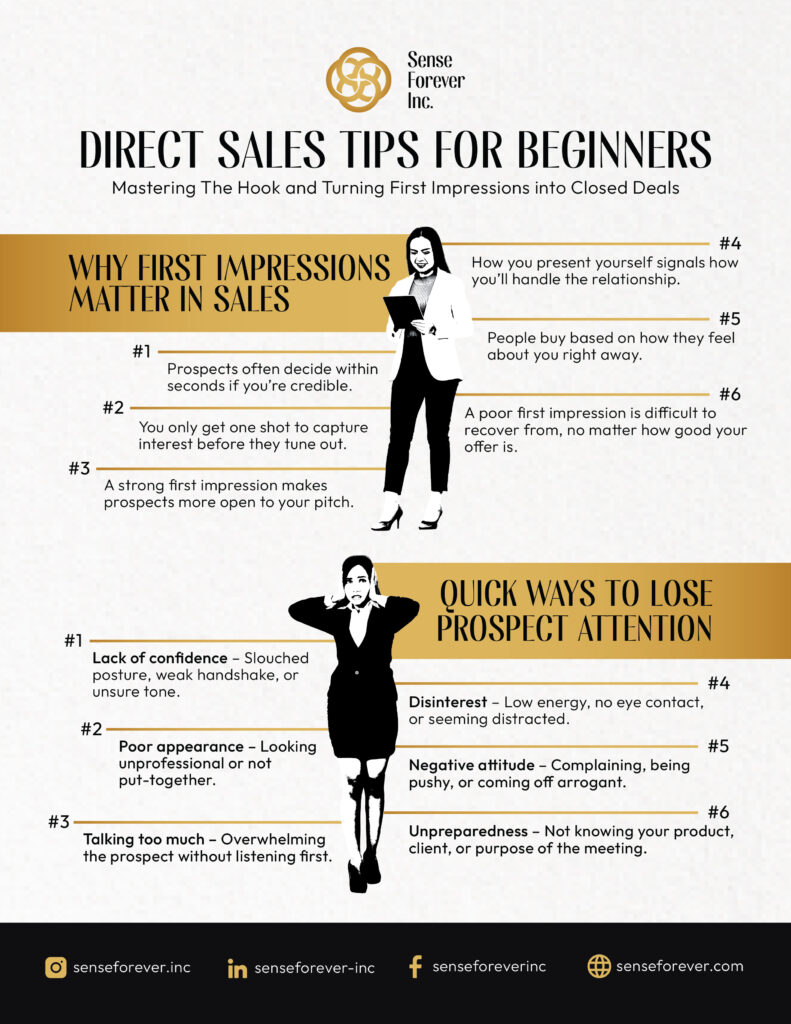
Prospects often decide within seconds if you’re credible, and that snap judgment shapes the entire interaction that follows. That means you only get one shot to capture interest before they tune out, mentally categorizing you as either worth their time or just another interruption in their busy day.
A strong first impression makes prospects:
- See you as credible and professional. Being confident, prepared, and professional in your delivery signals that you’re trustworthy and capable of handling a prospect’s needs effectively.
- Engage more openly. When prospects feel you’re attentive and competent, they’re more likely to share information about their needs and challenges.
- Remember you positively. A memorable first interaction sets the stage for future conversations and increases the likelihood of repeat engagement.
A poor first impression is difficult to recover from, no matter how good your offer is. Once prospects have mentally dismissed you, every word you say gets filtered through that negative lens.
What Is a Sales Hook and Why It Matters
A sales hook isn’t a gimmick or a manipulative trick, but a strategic opening that immediately demonstrates value and relevance to your prospect. The best hooks tap into fundamental human psychology: people pay attention when they believe something will benefit them, solve a problem they’re facing, or protect them from a potential loss.
At its core, a sales hook is the bridge between a stranger’s natural skepticism and their genuine curiosity. Within the first few seconds of interaction, your hook needs to accomplish several goals simultaneously:
- Establish your credibility. Show that you know your stuff and can be trusted.
- Demonstrate that you understand their world. Prove you get their challenges and priorities.
- Hint at the value you can provide. Give them a reason to see how you can help.
- Create enough intrigue that they want to continue the conversation. Spark curiosity so they’re eager to learn more.
The Fatal Mistakes That Can Kill Your Hook
Before we dive into what works, you need to understand what doesn’t. These six behaviors will destroy your hook before you’ve had a chance to demonstrate value.
The good news? They’re all completely within your control.
Lack of confidence
Slouched posture, a weak handshake, or an unsure tone instantly signal self-doubt. Prospects notice hesitation within seconds, and it will undermine your message instantly.
Poor appearance
Looking untidy or unprofessional signals that you don’t take the interaction seriously.
You don’t need expensive clothing or flashy accessories—just be neat, well-groomed, and appropriately dressed. One secret here is to match or slightly exceed the formality of your prospect’s environment, and pay attention to details like polished shoes, organized materials, and minimal distractions.
- Lack of Confidence – Slouched posture, a weak handshake, or an unsure tone instantly signals self-doubt. Prospects notice hesitation within seconds, and it can undermine your message immediately.
- Poor Appearance – Looking untidy or unprofessional signals that you don’t take the interaction seriously.
- Talking Too Much – Overloading prospects without listening is a common rookie mistake. Nervous energy often turns into a monologue, which can overwhelm or disengage your audience.
- Disinterest – Low energy, lack of eye contact, or distracted behavior signals that you’re not invested in the conversation.
- Negative Attitude – Complaining, pushiness, or arrogance immediately creates resistance and puts prospects on the defensive.
- Unpreparedness – Not knowing your product, client, or the purpose of the meeting destroys credibility and can quickly erode trust.
These mistakes are largely controllable through awareness, practice, and intentional preparation, from being presentable to highly positive in every interaction. The difference between effective and ineffective hooks often comes down to discipline—doing the small things consistently even when you’re nervous or facing rejection.
Direct Sales Tips For Crafting Your Opening Moments
Now that you know what to avoid, let’s focus on what actually works. The best direct sales strategies for opening conversations combine strong non-verbal presence with carefully crafted verbal hooks that create immediate value.
Let’s start with your physical presence
Your physical presence sets the stage before you say a single word. That’s why you must enter every interaction with energy that conveys enthusiasm without desperation. Do these tips for maximum impact:
- Project confident energy – Go into every interaction with enthusiasm that shows you’re engaged, without coming across as desperate.
- Maintain good posture – Stand or sit tall and engaged to radiate confidence without looking stiff.
- Offer a firm handshake – A strong, assured handshake immediately communicates professionalism and credibility.
- Smile genuinely – A warm, authentic smile builds instant rapport, making prospects feel welcomed, valued, and more open to your message.
- Be presentable – Dress neatly, stay well-groomed, and match or slightly exceed the formality of your prospect’s environment to reinforce professionalism.
Let’s move to your opening statements
When it comes to your opening words, you have several effective approaches:
- Insight-Based Opening – Lead with a relevant observation or piece of information that shows you understand their field. Reference an industry trend, a common challenge in their sector, or an opportunity they might be missing. Specificity is key—the more tailored, the more effective.
- Question Hook – Start with a thought-provoking question that encourages them to reflect on their current situation. The best questions reveal gaps between where they are and where they want to be, or highlight problems they may not have fully considered. Avoid yes/no questions that allow the conversation to shut down quickly.
- Value-First Approach – Immediately offer something useful before asking for anything in return. This could be a relevant insight, an industry report, or a quick observation that helps them see their situation differently. Leading with generosity positions you as someone focused on their success, not just making a sale.
Regardless of which approach you choose, follow this structure: acknowledge them personally, establish immediate relevance to their situation, create curiosity about what comes next, and invite dialogue rather than launching into a presentation.
Practice your hooks until they sound natural rather than scripted. The goal isn’t to memorize lines robotically, but to internalize the structure so you can adapt it naturally to each prospect while maintaining confidence and flow.
In Conclusion
Mastering first impressions and crafting a compelling sales hook is about preparation, awareness, and consistent practice. By refining your physical presence, honing your opening statements, and avoiding common pitfalls, you can turn fleeting first moments into meaningful conversations that drive results.
For beginners in direct sales, these skills are the foundation for building credibility, trust, and success with every prospect you meet.
Who Is Sense Forever Inc.?
Sense Forever Inc. is a direct marketing firm based in San Bernardino, California, specializing in connecting businesses with their target communities through authentic brand representation, serving clients in sectors like telecommunications.
We provide services like customer acquisition, lead generation, and market expansion. Plus, we offer sales and leadership training for aspiring professionals who want to accelerate their careers in direct marketing and beyond.
Contact Sense Forever Inc. today to learn how we can help you reach your business or career goals.